Can AI Help You Sleep Better? Smart Beds and Beyond
6 August 2026
You spend about a third of your life in bed. That is roughly 25 years, give or take. For something that takes up that much time, most people give it surprisingly little thought. You buy a mattress, maybe a pillow, and call it done. But over the last five years, the sleep industry has been quietly invaded by artificial intelligence. Not just the apps that track your snoring, but the bed itself. Smart beds now adjust firmness, temperature, and position in real time. They claim to detect breathing patterns, heart rate variability, and even predict when you will wake up naturally. The question is not whether these beds exist. It is whether they actually work, and more importantly, whether they are worth the money.
The honest answer is: it depends. AI can help you sleep better, but only if you understand what it is actually doing, what its limits are, and how to use it correctly. It is not magic. It is not a replacement for good sleep hygiene. And in some cases, it can make things worse if you let it feed your anxiety. This article will walk you through exactly what smart beds and AI sleep tools can and cannot do, where the real value lies, and what you should think about before spending thousands of dollars.
What a Smart Bed Actually Does
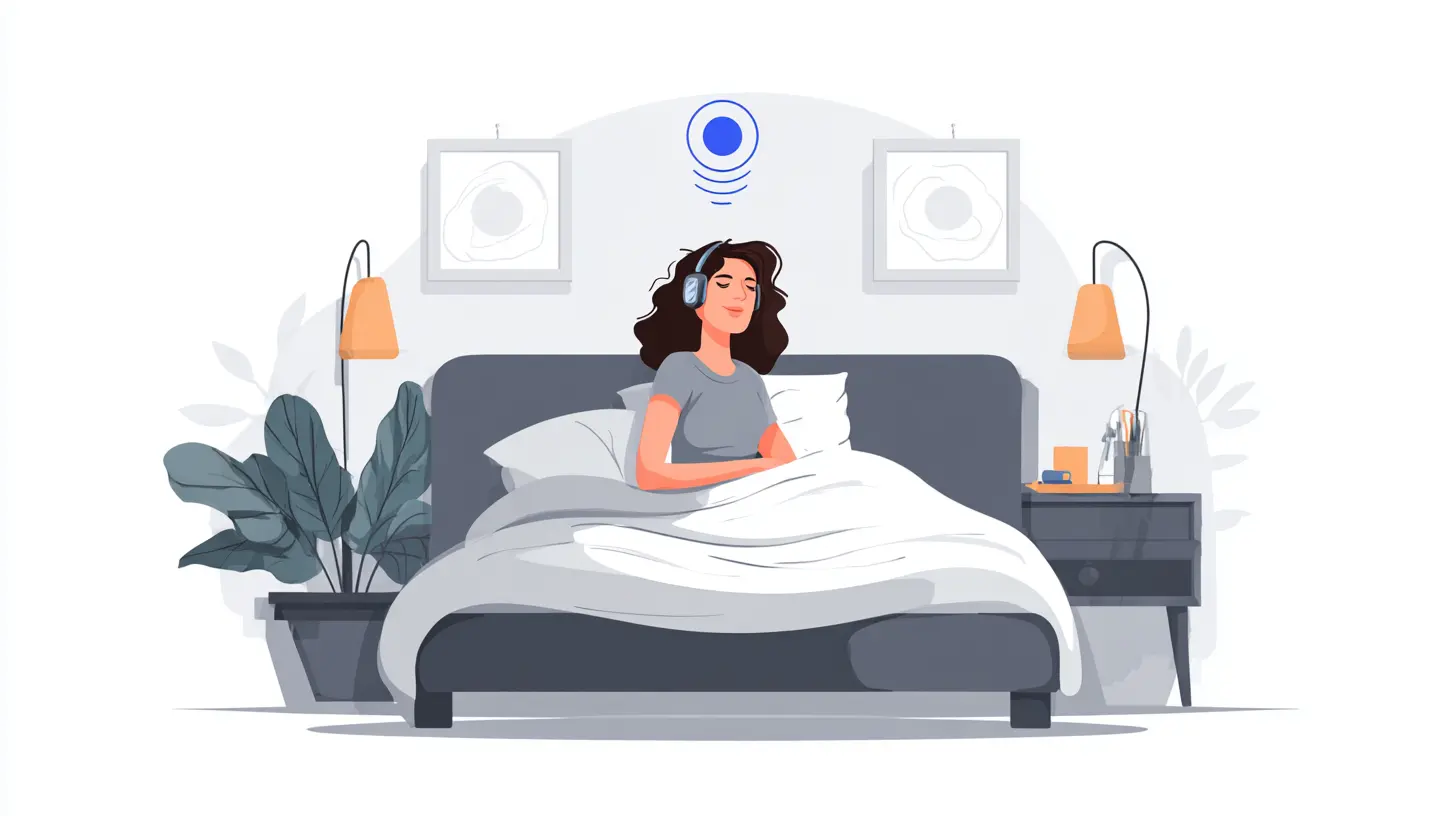
First, let us clear up a common confusion. A smart bed is not just a mattress with a Bluetooth speaker. It is a system that combines sensors, motors, and software. The sensors are usually embedded in the mattress or placed under the mattress. They track movement, heart rate, respiratory rate, and sometimes body temperature. The motors let the bed change shape, firmness, or tilt. The software, which is where the AI comes in, analyzes the data and makes adjustments automatically.The most common features are:
- Automatic firmness adjustment based on your sleeping position
- Temperature control for each side of the bed
- Anti-snoring modes that tilt your head slightly upward when snoring is detected
- Wake-up alarms that sync with your sleep cycle
- Sleep quality scores that track your sleep stages
Some premium models go further. They can detect when you are about to roll over and adjust support in advance. They can warm the foot of the bed before you get in. They can even sense if you have been lying still for too long and gently change pressure points to prevent discomfort.
The key thing to understand is that these beds are not making decisions in the way a human does. They are running pattern recognition algorithms. The system learns your typical sleep patterns over time. Then it compares real-time data to those patterns. When something deviates, it reacts. For example, if your breathing rate slows and your movement drops, the bed might assume you are entering deep sleep and stop adjusting temperature. If you start moving more, it might assume you are waking up and gently cool the bed.
That is genuinely useful. But it is also important to know that the AI is not thinking about you. It is looking for statistical correlations. It does not know you had a stressful day. It does not know you ate a heavy meal. It only knows your physical signals.
The Real Value: Data You Can Act On
The biggest benefit of a smart bed is not the automatic adjustments. It is the data. A good smart bed gives you a picture of your sleep that you simply cannot get from a wristband or a phone app. Why? Because you are not wearing it. There is no battery to charge, no strap to forget, no skin irritation. The bed is always there. It collects data every single night, whether you are sick, tired, drunk, or perfectly healthy.That continuous data stream is where the AI starts to become genuinely valuable. Over time, the bed can show you trends. You might notice that your sleep quality drops on nights when you work late. Or that your heart rate variability is lower after you drink alcohol, even if you only had one glass. Or that your sleep latency, the time it takes to fall asleep, increases sharply when you use your phone in bed.
This is not just interesting trivia. It is actionable. If you know that your sleep quality drops on nights when you eat within two hours of bedtime, you can change that behavior. If you know that your snoring spikes after you sleep on your back, you can train yourself to sleep on your side. The AI is not fixing the problem for you. It is showing you the problem clearly enough that you can fix it yourself.
That is the honest pitch for smart beds. They are not a cure. They are a diagnostic tool with some mechanical comfort features attached.
Temperature Control: The Unsung Hero
When people think of smart beds, they think of the AI. But the feature that gets the most consistent positive feedback is temperature control. And this is not just anecdotal. Sleep research has shown that your body temperature drops slightly as you fall asleep and continues to drop during deep sleep. If your body cannot cool down, it is much harder to enter and maintain deep sleep.Most smart beds offer some form of active temperature management. This can be a water-based system that circulates cooled or heated fluid through the mattress, or it can be an air-based system that blows air through channels. The AI part comes in when the bed adjusts the temperature based on your sleep stage. For example, it might cool the bed slightly during the first part of the night to help you fall asleep faster, then warm it a bit in the early morning to make waking up easier.
This is one area where the AI genuinely outperforms a static setting. If you set a fixed temperature, it might be comfortable when you fall asleep but too cold at 3 AM when your body has already cooled down. The smart system responds to your actual state. It is not perfect, but it is better than a manual thermostat.
One thing to consider: temperature control systems are expensive and they can be noisy. The water-based systems have pumps that make a soft humming sound. Air-based systems are quieter but less effective at cooling. If you are an extremely light sleeper, the pump noise might bother you. Test this before you buy.

Anti-Snoring and Positional Adjustments
Snoring is one of the most common reasons people look at smart beds. The idea is simple: the bed detects snoring through vibration sensors, then raises your head slightly. This helps keep your airway open. In many cases, this works. Positional snoring, which is snoring that happens when you sleep on your back, is often improved by elevating the head.But you need to understand the limits. A smart bed cannot fix obstructive sleep apnea. That is a medical condition where your airway physically closes, often due to tissue collapse. Raising your head might help mild cases, but it is not a treatment. If you snore loudly and consistently, or if your partner says you stop breathing during sleep, you need to see a doctor and get a sleep study. Do not rely on a bed to solve that.
The AI in anti-snoring mode works by detecting the vibration pattern of snoring. It then triggers the motors to raise the head section by a few degrees. The problem is that this can wake you up. The movement itself is usually gentle, but some people find it disruptive. If you are a light sleeper, the adjustment can pull you out of deep sleep. That trades one problem for another.
A better use of the positional adjustment feature is for people with acid reflux or mild edema. Elevating the head can reduce reflux symptoms at night. Elevating the legs can help with circulation. These are legitimate uses that have nothing to do with snoring.
The Dark Side: Sleep Tracking Anxiety
Here is the problem with all this data. It can make you anxious. There is a well-documented phenomenon called orthosomnia, which is a term coined by sleep researchers to describe people who become obsessed with perfecting their sleep tracking scores. They check their sleep data every morning. They worry about their deep sleep percentage. They panic when their score drops below a certain number.The irony is that this anxiety makes their sleep worse. They are not sleeping badly because of a medical issue. They are sleeping badly because they are stressed about their sleep data. The AI is not causing the problem directly, but it is feeding it.
If you are the type of person who already worries about your health, think carefully before buying a smart bed. The data is not always accurate. Consumer sleep trackers are not medical devices. They use indirect signals like movement and heart rate to estimate sleep stages. They are often wrong. A smart bed might tell you that you only got 20 minutes of deep sleep, but that could be a measurement error. It does not mean your brain is broken.
A practical rule: use the data for trends, not for daily judgments. Do not obsess over a single night. Look at the weekly average. If you notice a consistent pattern, that is worth acting on. If you see one bad night, ignore it. The AI is not a doctor. It is a pattern detector.
Comparing Smart Beds to Other Sleep Tech
Smart beds are expensive. A decent one starts around two thousand dollars and can go up to seven or eight thousand. Before you spend that kind of money, it is worth comparing them to other options.Wearable trackers like smartwatches and rings cost a few hundred dollars. They give you similar sleep stage data, but they are less accurate for movement detection and they require charging. They also cannot adjust your physical comfort. If your problem is that you are too hot at night, a smartwatch will tell you that, but it will not fix it.
Smart mattress toppers are a middle ground. You put them on top of your existing mattress. They offer temperature control and sometimes basic position adjustment. They cost less than a full smart bed, usually around five hundred to a thousand dollars. The downside is that they add thickness to your bed, which changes the feel. Some people find the topper too soft or too firm.
Adjustable bases are another option. These are the motorized frames that raise and lower your head and feet. They are not smart, meaning they do not have sensors or AI, but they do offer manual position control. They are much cheaper than full smart beds. If your main need is positional adjustment, an adjustable base with a regular mattress might be enough.
The real question is whether you need the AI at all. If you just want temperature control, a smart topper is fine. If you want positional adjustment, an adjustable base is fine. If you want the data and the automatic adjustments, then you need the full smart bed. Most people do not need the full smart bed.
What the AI Cannot Tell You
There is a lot of hype around AI sleep coaching. Some smart beds claim to give you personalized recommendations based on your sleep data. They might tell you to go to bed earlier, or to avoid caffeine after 2 PM, or to reduce screen time before bed.Here is the thing: you already know all of this. You do not need AI to tell you that caffeine keeps you awake. The recommendations are generic. They are based on standard sleep hygiene guidelines, not on your specific physiology. The AI might notice that your sleep is worse on nights when you exercise late, but it cannot tell you why. It cannot tell you if that is because your heart rate is elevated or because you are mentally stimulated. It just sees a correlation.
Also, the AI cannot account for psychological factors. It cannot measure stress, anxiety, or emotional state. Those are huge drivers of sleep quality. A person who is going through a divorce and a person who just got a promotion might have identical heart rate patterns, but their sleep problems are completely different. No bed sensor can distinguish between the two.
This is why you should treat AI sleep recommendations as suggestions, not prescriptions. They are useful for reminding you of best practices. They are not a substitute for talking to a healthcare professional if you have a real sleep problem.
Practical Tips for Getting the Most Out of a Smart Bed
If you decide to buy one, here is how to actually get value from it.First, give it time. The AI needs at least two weeks of data to learn your baseline. Do not judge it in the first few nights. The bed is not broken just because it makes one weird adjustment. Let it learn.
Second, set realistic expectations. The bed will not fix your sleep if you are drinking coffee at 6 PM. It will not fix your sleep if you are staring at your phone until midnight. It will not fix your sleep if you are chronically stressed. It is a tool, not a solution.
Third, use the data to change one thing at a time. Do not try to fix everything at once. Pick one variable, like room temperature or bedtime, and change it based on what the data shows. Track the results for a week. Then move on to the next variable. This is how you actually improve your sleep.
Fourth, keep the app notifications off. You do not need a push notification at 7 AM telling you that your sleep score was 82. That is noise. Check the data when you are ready to look at it, not when the app decides to bother you.
Fifth, involve your partner. Most smart beds have dual-zone control. That means each side can have different firmness and temperature. But the AI is learning from both of you. If you and your partner have very different sleep patterns, the system might get confused. Talk to each other about what settings feel good. Do not let the AI decide everything.
Common Mistakes and Misconceptions
One big misconception is that a smart bed can diagnose sleep apnea. It cannot. Some beds claim to detect apnea events, but they are not validated for that purpose. If you suspect sleep apnea, get a proper sleep study. That is non-negotiable.Another mistake is buying a smart bed for a guest room. The AI needs consistent use to learn your patterns. If different people sleep in the bed on different nights, the data is meaningless. The bed will never learn anything useful. Buy a regular mattress for guest rooms.
People also overestimate the accuracy of sleep stage tracking. The beds use heart rate and movement to estimate REM, light, and deep sleep. This is not the same as EEG, which measures brain waves. The estimates can be off by 10 to 20 percent depending on the night and the person. Do not treat the numbers as gospel.
There is also a misconception that the bed will automatically fix your sleep position. It will not. If you roll onto your back and start snoring, the bed can tilt your head. But it cannot stop you from rolling onto your back in the first place. Some people expect the bed to keep them on their side. That is not how it works.
Finally, do not buy a smart bed just because it has the word "AI" in the marketing. Some brands slap that label on a basic adjustable base with a built-in scale. That is not AI. That is a scale. Look for beds that actually process data over time and make adaptive changes. Read reviews from independent sources. Do not trust the brand's own website.
The Cost-Benefit Analysis
Let us be direct about money. A smart bed is a luxury item. It is not a medical device. It is not a necessity. The most expensive models cost more than a used car. Before you buy, ask yourself what you are actually getting for that money.If you have chronic back pain and need a mattress that adjusts firmness based on your position, a smart bed might help. If you sleep hot and have tried everything else, temperature control might be worth it. If you are curious about your sleep patterns and want more data than a wearable provides, the data alone might justify the cost.
But if you sleep fine, if you do not have specific complaints, if you are just interested in the novelty, save your money. A good quality regular mattress with a smart thermostat in your room will do more for your sleep than an AI bed you do not need.
There is also the question of longevity. Smart beds have electronics, motors, and software. Regular mattresses last 8 to 10 years. Smart beds have more failure points. The sensors can wear out. The motors can fail. The software can become outdated. You might end up replacing a smart bed after 5 or 6 years because the technology is obsolete. That is a real cost that people do not think about.
The Future of AI Sleep Technology
The current generation of smart beds is still early. The sensors are getting better, but they are not medical grade. The AI is getting smarter, but it is still limited to physical signals. The next generation will likely integrate with other health data. Your bed might connect to your blood pressure monitor, your glucose monitor, your stress tracking app. It might combine all that data to give you a more complete picture of your health.There is also research into using smart beds for early detection of health issues. Changes in heart rate variability and breathing patterns can be early signs of illness. A bed that tracks these continuously might catch problems before you notice symptoms. That is promising, but it is not here yet. Do not buy a bed today expecting it to predict your future health.
The more realistic near-term improvement is in personalization. The AI will get better at distinguishing between different types of snoring, different sleep disorders, and different responses to environmental changes. It will become more accurate at predicting when you want to wake up based on your natural cycle. It will integrate with your smart home to adjust lights, temperature, and sound. That will be genuinely useful.
But the core principle will not change. The bed is a tool. You are the one who has to live a life that supports good sleep. No amount of AI can compensate for poor habits.
Final Verdict
Can AI help you sleep better? Yes, but not the way the marketing suggests. It helps by giving you accurate, continuous data. It helps by adjusting your physical comfort in real time. It helps by showing you patterns that you can act on. It does not help by magically fixing your sleep. It does not help if you are anxious about the data. It does not help if you have an untreated medical condition.If you are a data-driven person who likes to optimize, a smart bed can be a valuable investment. If you are someone who gets stressed by numbers and notifications, it might be a waste of money or worse, a source of anxiety.
The smartest approach is to start with the basics. Fix your sleep schedule. Fix your room temperature. Fix your light exposure. Fix your caffeine intake. Then, if you still have issues, consider a smart bed as a diagnostic and comfort tool. Use it to fill in the gaps, not to replace your own judgment.
Your bed is not a computer. It is a place to rest. The AI should serve that purpose, not complicate it. If a smart bed helps you rest, great. If it stresses you out, get rid of it. The goal is better sleep, not better data.
all images in this post were generated using AI tools
Category:
Ai In Daily LifeAuthor:

Marcus Gray