How Natural Language Processing Is Changing Education Technology
3 July 2026
The first time I saw a language model grade a student essay with meaningful feedback, I realized we had crossed a threshold. It wasn't just about checking spelling or counting words anymore. The system understood the argument, spotted a weak thesis, and suggested a stronger counterexample. That moment crystallized something I had suspected for years: natural language processing (NLP) was about to reshape education technology in ways that went far beyond chatbots and auto-complete.
We are living through a quiet revolution in how students learn and how teachers teach. NLP is not a single tool but a collection of techniques that allow machines to read, interpret, and generate human language. When applied to education, it solves problems that have plagued classrooms for decades: personalized feedback at scale, real-time language support, and intelligent content adaptation. But like any powerful technology, it comes with trade-offs, common mistakes, and ethical pitfalls that educators and developers must navigate carefully.

What NLP Actually Does in Education
Let's start with the basics. Natural language processing in education technology is not magic. It is a set of statistical and neural models trained on vast amounts of text. These models can perform several core tasks that are directly useful in learning environments.First, there is text classification. This is where a system reads a student's response and decides whether it is correct, partially correct, or off-topic. It can also detect sentiment, confusion, or frustration in student writing. Second, there is information extraction. The system pulls out key concepts, dates, names, or definitions from a passage. Third, there is text generation. This is what powers essay feedback, question generation, and even tutoring dialogues. Fourth, there is machine translation and language modeling, which helps non-native speakers access content in their own language or practice a second language.
Each of these capabilities has specific applications in education. But the real value comes from combining them. For example, a system that classifies a student's confusion and then generates a clarifying question can act like a patient tutor. That is where the magic happens, but also where the risks appear.
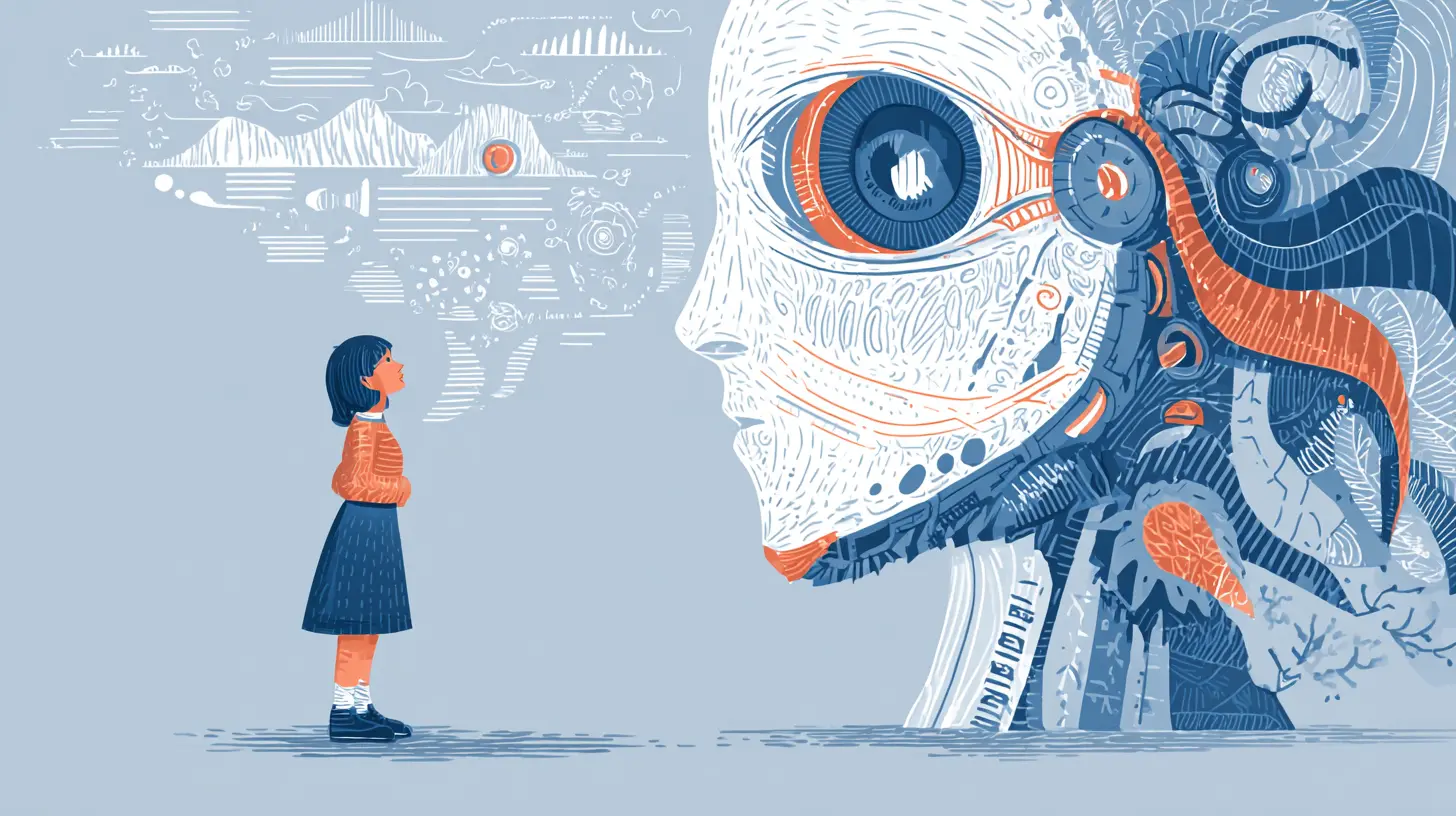
The Shift from One-Size-Fits-All to Adaptive Learning
Traditional education technology was built on a broadcast model. A video plays, a quiz appears, and the system tells you if you got the answer right. That model works for some students, but it ignores the fact that learning is deeply personal. Two students can read the same paragraph and come away with entirely different misunderstandings.NLP changes this by enabling adaptive learning that is responsive to language. Instead of just checking if an answer matches a key, the system can analyze the student's own words. If a student writes "photosynthesis uses sunlight to make sugar, but it also needs water," the system recognizes that the student understands the basic concept but has omitted the role of chlorophyll. It can then generate a targeted prompt: "You are correct that sunlight and water are needed. Can you explain what part of the plant cell captures the sunlight?"
This kind of interaction was impossible with earlier technology. Multiple-choice questions cannot capture nuance. Fill-in-the-blank exercises cannot handle creative phrasing. NLP opens the door to open-ended responses that reveal deeper understanding. And because the system can process thousands of responses per second, it scales to classrooms of any size.
But there is a catch. Adaptive NLP systems require high-quality training data that matches the curriculum. A model trained on general web text will not know the specific terminology of a high school biology class. It might misinterpret "ATP" as a tennis tournament instead of adenosine triphosphate. Developers must fine-tune models on domain-specific data, which is expensive and time-consuming. Schools that skip this step often end up with systems that give misleading feedback.
Automated Essay Scoring: Promise and Peril
One of the most mature applications of NLP in education is automated essay scoring. Systems like e-rater and PEG have been used for years in standardized tests. They measure grammar, organization, vocabulary, and even argument quality. The promise is obvious: teachers can assign more writing without drowning in grading.But the reality is more complicated. Automated scoring works well for surface-level features. It can catch run-on sentences, passive voice, and redundant phrasing. It can even detect whether an essay has a clear thesis statement. What it struggles with is creativity, irony, and deep reasoning. A student who writes a deliberately unconventional essay might get a low score even though the ideas are brilliant.
I have seen this happen in real classrooms. A student wrote a satirical piece about school lunches, using exaggeration to make a point about nutrition. The automated system flagged it as incoherent and gave a failing grade. The teacher, who knew the student's ability, overrode the score. But not every teacher has the time or confidence to override a system.
The best practice here is to use automated scoring as a first pass, not a final judgment. Let the system flag obvious issues and provide basic feedback. Then let the teacher focus on the higher-level aspects that machines cannot handle. This hybrid approach saves time without sacrificing quality. Schools that try to automate the entire grading process often face backlash from students and parents who feel that machines cannot understand their voice.
Real-Time Language Support for Diverse Learners
Classrooms today are more linguistically diverse than ever. In many districts, a third of students speak a language other than English at home. Traditional ESL programs help, but they cannot provide one-on-one support for every student during every lesson.NLP-powered tools are filling this gap. Real-time translation systems like those built into Microsoft Translator or Google Translate allow students to follow lectures in their native language while the teacher speaks in English. More advanced systems go beyond word-for-word translation. They adapt the complexity of the text to the student's reading level. A sixth grader reading about the water cycle might see simplified sentences with key vocabulary highlighted. A college student reading the same article might see the full technical version.
This is not just about language. It is about equity. A student who struggles with English should not also struggle with science content. By separating language proficiency from subject knowledge, NLP allows teachers to assess what students actually know rather than how well they can express it in a second language.
But there is a common mistake here. Some schools assume that translation tools are a complete solution. They are not. A student who relies entirely on machine translation will not develop English fluency. The tools should be used as scaffolds that are gradually removed. A good system tracks the student's progress and reduces support over time. It also flags situations where the student is guessing based on translation rather than understanding the content.
Intelligent Tutoring Systems That Actually Listen
The idea of an intelligent tutoring system has been around since the 1970s. Early systems like SCHOLAR and WHY used rule-based approaches to guide students through Socratic dialogues. They worked well in narrow domains but fell apart when students asked unexpected questions.NLP changes this by giving tutoring systems a much richer understanding of language. Modern systems like Carnegie Learning's MATHia use natural language input to understand how a student is reasoning about a problem. Instead of just checking if the answer is 42, the system asks "How did you get that?" and analyzes the student's explanation.
This is powerful because it catches misconceptions that multiple-choice questions miss. A student might get the right answer for the wrong reason. For example, in a probability problem, a student might correctly calculate 0.25 but believe that "25% means it will happen every fourth time." The system can detect that misunderstanding from the student's explanation and provide a targeted correction.
The trade-off is that these systems require careful design. They need to handle ambiguous language, incomplete sentences, and off-topic rambling. A student might type "I dunno lol" instead of a serious answer. The system must decide whether to treat that as a request for help, a sign of frustration, or a joke. Getting this wrong can frustrate students or make them feel that the system does not take them seriously.
Content Generation and Curriculum Design
NLP is also changing how educational content is created. Instead of writing every quiz question by hand, teachers can use language models to generate multiple versions of the same question. This is useful for preventing cheating and for providing differentiated assessments. A student who needs more practice can get a new set of questions that test the same skill with different numbers and contexts.More ambitiously, NLP can generate entire lessons. A teacher can input a topic like "the causes of World War I" and the system can produce a reading passage, comprehension questions, vocabulary lists, and discussion prompts. The teacher then reviews and edits the output. This saves hours of preparation time.
But there is a serious caution here. Language models are prone to hallucination, meaning they generate plausible-sounding but factually incorrect information. A model might confidently state that Archduke Franz Ferdinand was assassinated in 1915 instead of 1914. If the teacher does not catch the error, students learn wrong facts. The responsibility for accuracy always falls on the human. Teachers should treat AI-generated content as a draft, not a final product.
Another concern is bias. Language models trained on internet text absorb the biases present in that text. They might generate examples that reinforce stereotypes or exclude certain groups. A model asked to generate a story about a scientist might default to male names and Western settings. Curriculum designers must actively check for and correct these biases. Relying on NLP without human oversight can perpetuate harmful patterns.
Common Misconceptions About NLP in Education
I have encountered several persistent misconceptions in my work with schools and edtech companies. Let me address them directly.The first is that NLP can replace teachers. It cannot. NLP is a tool that augments teaching, not a substitute for human connection. A machine can grade an essay, but it cannot inspire a reluctant writer. It can translate a lecture, but it cannot build the trust that a student needs to take risks. The best outcomes come from combining NLP efficiency with human empathy.
The second misconception is that NLP works out of the box. It does not. Every educational context is different. A model trained on college-level physics will fail in a middle school classroom. A model trained on American English will struggle with British spelling and idioms. Schools need to invest in customization, testing, and ongoing refinement. The vendors who promise a plug-and-play solution are usually overselling.
The third misconception is that NLP is unbiased. It is not. Language models reflect the data they are trained on, and that data contains historical biases. If you train a model on textbooks from the 1950s, it will reproduce the gender and racial stereotypes of that era. Even modern models have been shown to associate certain professions with certain genders. Schools must audit their NLP tools for bias and demand transparency from vendors.
Practical Advice for Implementing NLP Tools
If you are an educator or administrator considering NLP tools, here is my practical advice.Start with a clear problem. Do not adopt NLP because it is trendy. Identify a specific pain point: too much grading, language barriers, or lack of personalized feedback. Then evaluate tools that address that exact problem. A tool that does everything often does nothing well.
Pilot small. Pick one class or one subject and test the tool for a semester. Collect data on student outcomes and teacher satisfaction. Compare it to a control group that does not use the tool. This gives you evidence to justify wider adoption or to reject the tool if it does not work.
Train your teachers. The best NLP tool is useless if teachers do not understand how to use it. Provide hands-on training that covers not just the technical operation but also the pedagogical strategies. Teachers need to know when to trust the tool and when to override it. They also need to know how to explain the tool to students and parents.
Monitor for drift. NLP models change over time. The model that worked well in September might behave differently in March because the vendor updated it or because new student data shifted its behavior. Regularly check the tool's output for quality and fairness. If you see a sudden drop in accuracy, investigate immediately.
The Future of NLP in Education
Looking ahead, I see several trends that will deepen the impact of NLP on education technology.One is multimodal learning. Future systems will combine text, speech, images, and even video. A student might explain a concept verbally while drawing a diagram on a tablet. The NLP system will analyze both the speech and the drawing to provide integrated feedback. This is closer to how humans actually learn, through multiple channels.
Another trend is lifelong learning companions. Instead of a tool used only during school hours, NLP systems will follow students across years. They will remember what a student struggled with in sixth grade and adapt eighth-grade content accordingly. This requires careful data management and privacy protections, but the potential for continuity is enormous.
Finally, there is the rise of open-source models. As large language models become more accessible, schools will be able to run them locally instead of relying on cloud services. This reduces cost, improves privacy, and allows for deeper customization. The trade-off is that running these models requires technical expertise that many schools lack. Partnerships with universities or nonprofits may be necessary.
Conclusion
Natural language processing is not a magic wand. It is a set of tools that, when used wisely, can make education more personalized, more equitable, and more effective. It can give teachers back hours of time, provide students with instant feedback, and break down language barriers that have persisted for generations.But the technology is only as good as the humans who implement it. Without careful design, it can reinforce bias, spread misinformation, and alienate students. With thoughtful integration, it can help every student find their voice.
The best advice I can give is this: start with empathy, not with code. Understand what your students and teachers truly need. Then let NLP be the tool that helps you meet those needs. The technology will keep evolving, but the goal remains the same: to help people learn.
all images in this post were generated using AI tools
Category:
Natural Language ProcessingAuthor:

Marcus Gray