The Role of Machine Learning in Future Collaborative Software
16 August 2026
Collaborative software has come a long way from the early days of shared documents and threaded email. We now have real-time co-authoring, video meetings with live captions, and task boards that update across time zones. Yet for all that progress, the tools still expect us to do the heavy lifting. We organize the folders, we chase the approvals, we summarize the meetings, and we figure out who should see what. Machine learning is about to change that division of labor, and the shift will be more profound than adding another chatbot to the toolbar.
The next generation of collaborative software will not just store and transmit information. It will understand the context of that information, anticipate what people need, and quietly handle the coordination work that currently eats up hours of every workweek. This is not science fiction. The underlying techniques already exist. What is changing is the willingness of software vendors to embed them deeply into the workflows that teams actually use.

Why Collaboration Is the Hardest Problem for Machine Learning
Machine learning thrives on pattern recognition. It can spot fraud in transaction data, recommend movies, and translate languages because those tasks have clear inputs and outputs. Collaboration is messier. A conversation between three people about a product launch involves personality, politics, unspoken assumptions, and shifting priorities. The same sentence can mean different things depending on who said it and when.That is why early attempts at adding intelligence to collaboration tools felt gimmicky. Auto-summarizing a chat log is useful, but only if the summary captures the decisions and the action items, not just the topics. Predicting which document you want to open next is helpful, but only if it understands that you are preparing for a client review, not just clicking around. The machine needs a model of the work, not just the words.
The good news is that modern machine learning models are getting better at exactly this kind of contextual reasoning. Large language models can track nuance across long conversations. Graph neural networks can model relationships between people, tasks, and documents. Reinforcement learning can optimize workflows based on outcomes. The challenge is combining these approaches into a coherent system that feels like a helpful colleague rather than an intrusive algorithm.
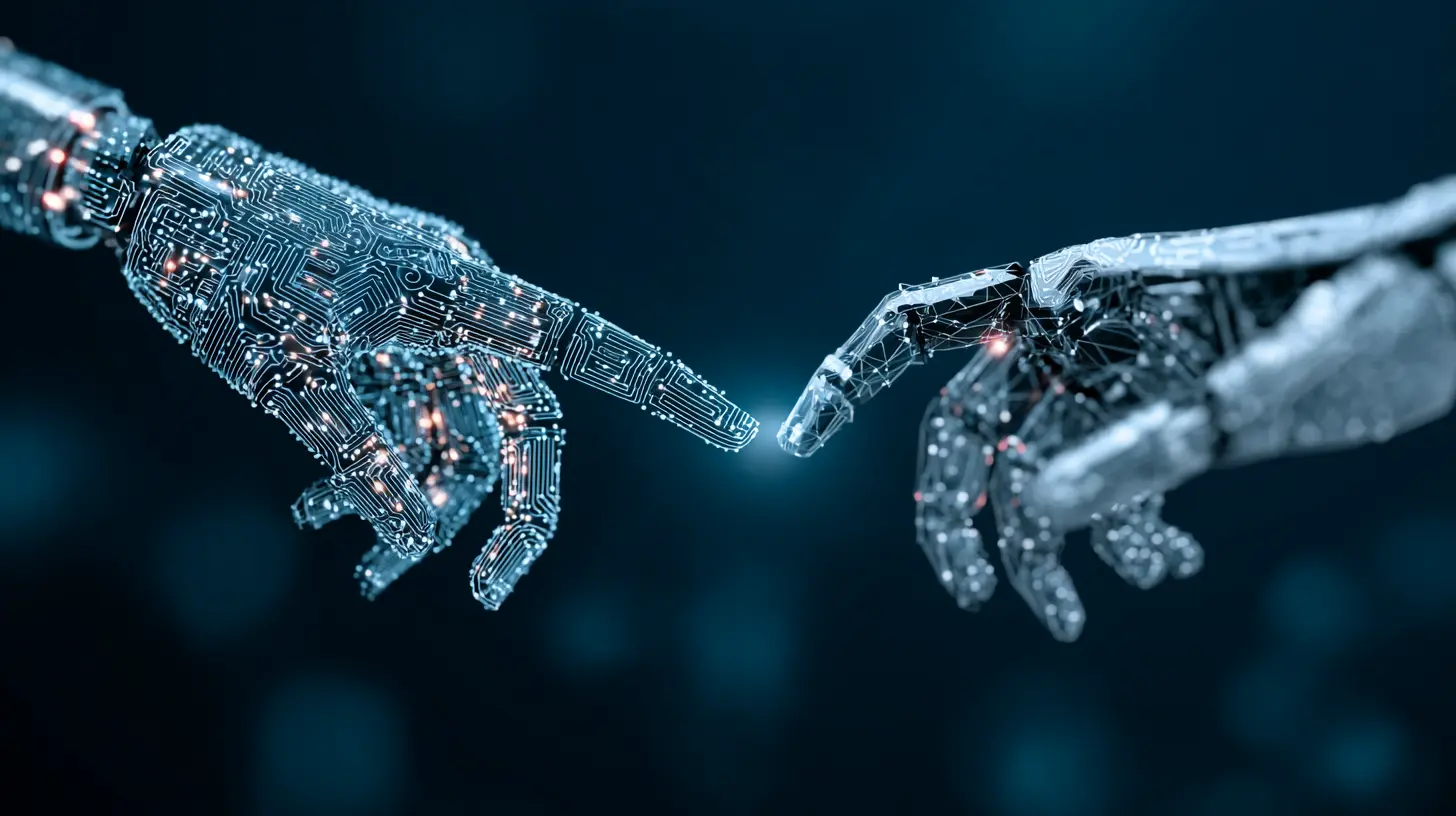
Moving from Passive Storage to Active Coordination
Today's collaborative software is essentially a collection of containers. Documents live in folders. Tasks live on boards. Messages live in threads. The intelligence, such as it is, comes from search and notifications. Machine learning changes the fundamental metaphor. Instead of a filing cabinet, the software becomes a partner that knows what is happening and what might happen next.Consider the meeting scheduling problem. A traditional tool checks calendars and proposes times. A machine learning enhanced tool looks at the history of a project, sees that the design review is blocked on a decision, and automatically schedules a focused conversation with the two people who have the authority to unblock it. It does not wait to be asked. It recognizes the pattern of a stalled task and takes initiative.
This proactive behavior is the real shift. It moves the software from a reactive tool to an active participant. The implications are significant for how teams plan their days, how managers allocate attention, and how organizations define accountability.
Example: The Self-Organizing Project Board
Imagine a project management tool that has watched your team for six months. It has seen how long certain types of tasks take, which people tend to work well together, and when deadlines get missed. When a new project is created, the tool does not just create a template. It estimates the timeline based on past performance, suggests an assignment order that minimizes handoffs, and flags the two tasks that are likely to become bottlenecks.None of this requires the tool to be omniscient. It is using historical data to make probabilistic predictions. The key is that the predictions are grounded in your team's actual behavior, not generic industry benchmarks. A team that works in two-hour deep work blocks gets different suggestions than a team that works in fifteen minute increments.
The trade-off is trust. If the tool makes suggestions that are wrong, people will ignore it. If it makes suggestions that are surprisingly right, people will start to rely on it. The best implementations will be transparent about why they are making a suggestion, allowing users to see the reasoning and override it when necessary.

The Rise of Context-Aware Communication
One of the most visible changes will be in how we communicate inside collaborative tools. Currently, messages are flat. You type words, attach a file, and hit send. The recipient has to read the message, open the file, and figure out what you need. Machine learning can change this by enriching the context around every communication.A message about a bug report should automatically pull in the relevant code changes, the last test results, and the name of the person who introduced the regression. A message about a budget update should show the current spending against the forecast, not just a spreadsheet attachment. The machine learning model figures out what is relevant based on the content of the message and the state of the project.
This is more than clever linking. It changes the cognitive load of collaboration. Instead of asking people to remember where information lives, the software brings the information to them. It reduces the friction of getting up to speed on a topic, which is often the biggest cost in collaborative work.
The Risk of Information Overload
There is a legitimate concern here. If the software starts attaching everything it thinks is relevant, it could bury people in data. The answer is not to show more, but to show the right thing at the right time. A good model will distinguish between what is relevant for a quick question and what is relevant for a detailed review.The distinction often comes down to the urgency and the audience. A message to a wide channel needs less context because most people just need the headline. A direct message to a specialist needs more context because they are going to act on it. Machine learning can infer this from the conversation history and the roles of the participants.

Intelligent Task Assignment and Workload Balancing
Task assignment is a classic pain point in collaboration. Managers often assign work based on who is available, not who is best suited, because they do not have a clear picture of everyone's skills and current load. Machine learning can change this by building a dynamic model of each person's capacity and expertise.The model learns from multiple signals. It sees which tasks a person completes successfully, how long they take, and what feedback they receive. It also sees their calendar, their message patterns, and their past collaborations. With enough data, the model can predict with reasonable accuracy whether a person is likely to do well on a given task and how long it will take them.
The practical benefit is a more balanced workload. Instead of the same three people getting all the difficult assignments, the tool can identify team members who are underutilized but capable. It can also flag when someone is overcommitted and suggest redistributing their tasks before burnout becomes a problem.
The Danger of Algorithmic Favoritism
There is a dark side to this. If the model is trained on historical data, it will reproduce historical biases. If certain groups of people have been historically given less challenging work, the model might continue that pattern. If the data reflects a culture where some people are penalized for speaking up, the model might learn to avoid assigning them to critical discussions.The mitigation is not to avoid machine learning, but to design the system with fairness in mind. This means monitoring the suggestions for bias, allowing users to challenge the model's reasoning, and ensuring that the training data is as complete and unbiased as possible. It also means keeping a human in the loop for high-stakes decisions, at least until the model has proven itself.
Real-Time Collaborative Editing Gets a Brain
Real-time collaborative editing is one of the few features that has truly changed how people work. Google Docs and similar tools eliminated the version control nightmare. But the editing experience itself is still quite manual. You see a comment, you respond, you make a change, you wait for approval. Machine learning can make this process much smoother.Imagine a collaborative document that understands the structure of the argument being made. When you write a paragraph that contradicts an earlier section, the tool flags the inconsistency. When you reference a metric, it checks whether the number is current. When you use a term that the team has defined differently elsewhere, it asks if you want to align the language.
This is not the same as spellcheck or grammar suggestions. It is semantic understanding. The tool is not just looking at the words; it is modeling the meaning and the relationships between ideas. This is harder to build, but the payoff is enormous for teams that produce long documents like proposals, reports, and specifications.
The Writing Assistant That Knows the Audience
A more advanced feature would be audience-aware writing assistance. The tool knows that a document is going to the executive team, so it flags jargon and suggests simpler language. It knows that the document is for a technical review, so it checks whether the assumptions are stated clearly. It knows that the document is for a client, so it checks whether the tone is appropriately diplomatic.This kind of assistance requires the model to understand not just the document but the organization and the relationship between the writer and the reader. That is a hard problem, but it is the kind of problem that machine learning is uniquely suited to tackle.
The Changing Role of Meetings
Meetings are where collaboration often goes to die. Too many people, unclear agendas, and no follow-through. Machine learning will not make meetings fun, but it can make them dramatically more productive.The first step is intelligent meeting preparation. The tool scans the calendar, the project status, and the attendee list to generate a briefing document. It tells you what was discussed last time, what progress has been made since then, and what open questions need answers. It also suggests a realistic agenda based on the time available and the priorities of the participants.
During the meeting, the tool can provide live transcription and real-time action item detection. It does not just record what was said. It identifies commitments, assigns owners, and links the discussion to relevant tasks and documents. After the meeting, it sends a summary that is actually useful, not just a transcript dump.
The Subtle Problem of Meeting Fatigue
One of the underappreciated benefits of machine learning in meetings is reducing the number of meetings altogether. If the tool can accurately summarize a discussion and capture decisions, it becomes feasible to communicate asynchronously. A team that would have scheduled a status meeting can instead post updates and let the tool aggregate them.This is not about replacing human interaction. It is about reserving meetings for the things that genuinely need synchronous conversation, like brainstorming, conflict resolution, and relationship building. The machine learning model helps by making asynchronous communication rich enough to substitute for a meeting in many cases.
How Machine Learning Will Change the Role of the Manager
Managers spend a huge portion of their time on coordination. They check in on progress, answer questions, resolve blockers, and keep everyone aligned. Machine learning will not eliminate the need for managers, but it will change what they do.The software can handle the routine coordination. It can track progress, identify risks, and suggest next steps. It can answer simple questions from team members about project status. It can even draft status reports for stakeholders. This frees the manager to focus on the human parts of the job: coaching, mentoring, and making judgment calls that require empathy and experience.
The risk is that managers become disconnected from the details. If the tool handles all the routine tracking, a manager might lose the feel for what is happening on the ground. The best practice is to use the machine learning output as a starting point, not a final answer. Managers should still read the original messages, talk to people directly, and question the tool's assumptions.
The Data Problem Nobody Wants to Talk About
All of these features depend on data. The machine learning model needs to see the messages, the documents, the tasks, the calendars, and the outcomes. That is sensitive information. It includes personal communication, performance data, and potentially confidential business strategy.The tension is real. The more data the model has, the better it can help. But the more data it has, the greater the risk of a breach or misuse. Organizations need to be clear about what data is being collected, how it is being used, and who has access to it.
A practical approach is to use federated learning, where the model is trained on data that stays on the organization's servers, rather than being sent to a central cloud. This is harder to build, but it addresses many of the privacy concerns. Another approach is to give users granular control over what the model can see and do. A user might allow the model to read their calendar but not their private messages.
The Misconception That More Data Is Always Better
It is tempting to think that a more powerful model just needs more data. In reality, the quality and relevance of the data matter more than the quantity. A model trained on two years of a specific team's collaboration patterns will be far more useful than a model trained on a billion generic conversations from the internet.This means that organizations should not wait for a perfect, all-knowing system. They should start with a focused use case, collect data on that use case, and iterate. The model will improve as it sees more examples of how the team actually works.
Common Mistakes When Implementing Machine Learning in Collaboration Tools
The biggest mistake is treating machine learning as a bolt-on feature rather than a core design principle. If you add a chat widget that uses a language model but the rest of the tool is unchanged, you get a novelty, not a transformation. The intelligence needs to be woven into every interaction.Another mistake is over-automation. If the tool starts making decisions and taking actions without asking, it will quickly alienate users. People want control. The tool should suggest, recommend, and flag, but the final decision should rest with the human.
A third mistake is ignoring the social dynamics of a team. A model that optimizes for efficiency might schedule a meeting at 7 AM because everyone is free, but that is a terrible idea. The model needs to understand preferences, culture, and morale, not just availability.
Best Practices for Teams Adopting Intelligent Collaboration Tools
Start small. Pick one workflow, such as meeting summaries or task prioritization, and use the tool there. Measure whether it actually saves time or improves outcomes. If it does, expand to another workflow.Keep the human in the loop. Use the machine learning output as a draft, a suggestion, or a flag. Let people edit, override, and provide feedback. That feedback is also training data, so the model will get better over time.
Be transparent about what the tool is doing. If a user asks why the tool assigned a task to them, the tool should be able to explain its reasoning. This builds trust and helps users understand the model's strengths and limitations.
The Long-Term Vision: Software That Thinks Like a Team
The ultimate goal is not a tool that replaces collaboration. It is a tool that amplifies it. The software will understand the rhythm of the team, the history of the project, and the goals of the organization. It will act as a memory, a coordinator, and a nudge system all at once.Imagine logging in and seeing a prioritized list of the three things you should do today, based on the project status, your skills, and the dependencies. Imagine a system that notices you are spending too much time on low-impact tasks and suggests delegating some of them. Imagine a system that sees a potential conflict between two team members and flags it before it becomes a problem.
These capabilities are not hypothetical. They are being built right now in research labs and forward-thinking companies. The technology is moving fast, but the principles of good collaboration remain the same: clear communication, mutual respect, and shared purpose. Machine learning will not change those principles. It will just make it easier to live by them.
What to Consider Before You Buy an AI-Powered Collaboration Tool
Before you invest in a tool that promises machine learning features, ask hard questions. What data does it collect? How long is the data retained? Can you export your data? How does the model handle edge cases and unusual workflows? Is the model trained on your industry, or is it generic?Also ask about the cost. The best machine learning models are expensive to run, and the vendor might pass that cost on to you. Make sure you understand whether the value you are getting justifies the price. A tool that saves each employee ten minutes a day can be worth a lot, but only if the adoption is real.
Finally, consider the vendor's track record. Have they shipped other AI features that actually work? Do they have a clear roadmap for improvement? Are they transparent about the limitations of their models? A vendor that overpromises and underdelivers will waste your time and erode trust in the technology.
The Bottom Line
Machine learning will not make collaboration software magically intelligent overnight. It will arrive in increments, often unnoticed. A better suggestion here, a more accurate prediction there. Over time, these increments will add up to a fundamentally different way of working.The teams that benefit the most will be the ones that treat the technology as a partner, not a magic wand. They will give it good data, tune it to their context, and keep humans in charge of the final decisions. They will also be willing to change their own habits, because the tool can only be as good as the workflow it supports.
The future of collaborative software is not about machines taking over. It is about machines taking on the tedious parts, so that people can focus on the creative, the strategic, and the human parts. That is a future worth building.
all images in this post were generated using AI tools
Category:
Collaborative SoftwareAuthor:

Marcus Gray