Why the Future of Remote Work Depends on Smarter Collaboration Apps
3 August 2026
The first wave of remote work was a blunt instrument. We took tools designed for offices and forced them into our homes. Video calls replaced meetings, chat channels replaced hallway conversations, and email became a monster that never slept. It worked, barely, but it exposed a hard truth: the problem with remote work was never the internet connection or the laptop. It was the layer of software that sits between intention and action.
That layer is now the battleground. The companies that thrive in the next decade will not be the ones with the best office perks or the fastest fiber. They will be the ones that figure out how to make collaboration software feel less like a series of hurdles and more like a natural extension of human thought. The current suite of tools is not fit for that purpose. It is a collection of patches, each solving one problem while creating two others. The future depends on a fundamental redesign, not another incremental update.

The Hidden Tax of Context Switching
Ask any remote worker what drains them most, and they will rarely say the work itself. They will say the cost of moving between tools. A typical day involves a chat app for quick questions, a video tool for meetings, a document editor for shared work, a project tracker for status updates, and an email client for anything that needs a paper trail. Each switch costs more than the few seconds it takes to click a tab. It costs cognitive momentum.Research on task switching has shown for years that shifting attention between unrelated activities degrades performance. But the problem is worse in digital collaboration because the tools do not share a common memory. When you leave a chat thread to open a document, the document does not know what was said in the chat. When you update a project tracker, the people in the meeting do not see that change in real time. Every action requires a manual act of translation. You become the API between your own tools.
The smarter approach is not to build one app that does everything. That path leads to bloated software that does many things poorly. The better path is interoperability at the data level. Collaboration apps need to share a common context layer, so that a decision made in a video call automatically updates the project plan, and a comment on a design file appears in the relevant chat thread without anyone having to copy and paste it. This is not a fantasy. It is a design principle that the best modern tools are starting to adopt, but the industry as a whole is moving far too slowly.

Why Synchronous Tools Are Overrated
The default instinct for remote teams is to replicate the office. That means more meetings, more video calls, and more real-time chat. This is a mistake. Synchronous communication is expensive. It requires everyone to be available at the same moment, which is a luxury in a distributed team spanning time zones. It also favors the loudest voice and the fastest typist, not necessarily the best idea.The future of collaboration is asynchronous-first. This does not mean banning video calls. It means treating them as a last resort for decisions that genuinely need live debate, not as the default for every status update. Asynchronous work allows people to think before they respond, to work in deep focus blocks, and to contribute on their own schedule. The tools that support this are not simply message boards. They are structured systems for capturing decisions, rationale, and next steps in a way that anyone can pick up later without needing a recap.
The best async tools share a few traits. They separate the signal from the noise, so that a busy person can scan a project without reading fifty comments. They make the reason behind a decision visible, not just the decision itself. And they allow for a "cooling off" period, where a proposal sits for a day before anyone is expected to react. This reduces the pressure of the instant response and leads to better outcomes. Teams that switch from a default-sync culture to a default-async culture often report less fatigue and higher quality output, but the transition is hard because it goes against the muscle memory of office work.

The Problem with Notification Hell
Every collaboration app has the same core flaw. It assumes that everything is urgent. A mention, a comment, a change, an approval request, all of them trigger a notification. The result is a constant low-grade anxiety, a feeling that you are always behind. This is not a user error. It is a design failure.Smart collaboration apps must understand priority and context. They need to differentiate between a message that requires action, one that is informational, and one that is purely social. The current model treats all three the same. The future model will use the content of the message and the relationship of the sender to the receiver to decide whether to interrupt at all. This is not about building an AI that reads your mind. It is about building rules that the user can set once and trust.
For example, a notification about a change in a critical document on the day before a launch should be loud. A notification about a typo fix in a low-priority file should be silent until the user chooses to look. The app should learn from behavior, but it should also let the user override its assumptions. The worst thing a collaboration tool can do is become another source of noise. The best thing it can do is become a filter that lets the important stuff through and quietly archives the rest.
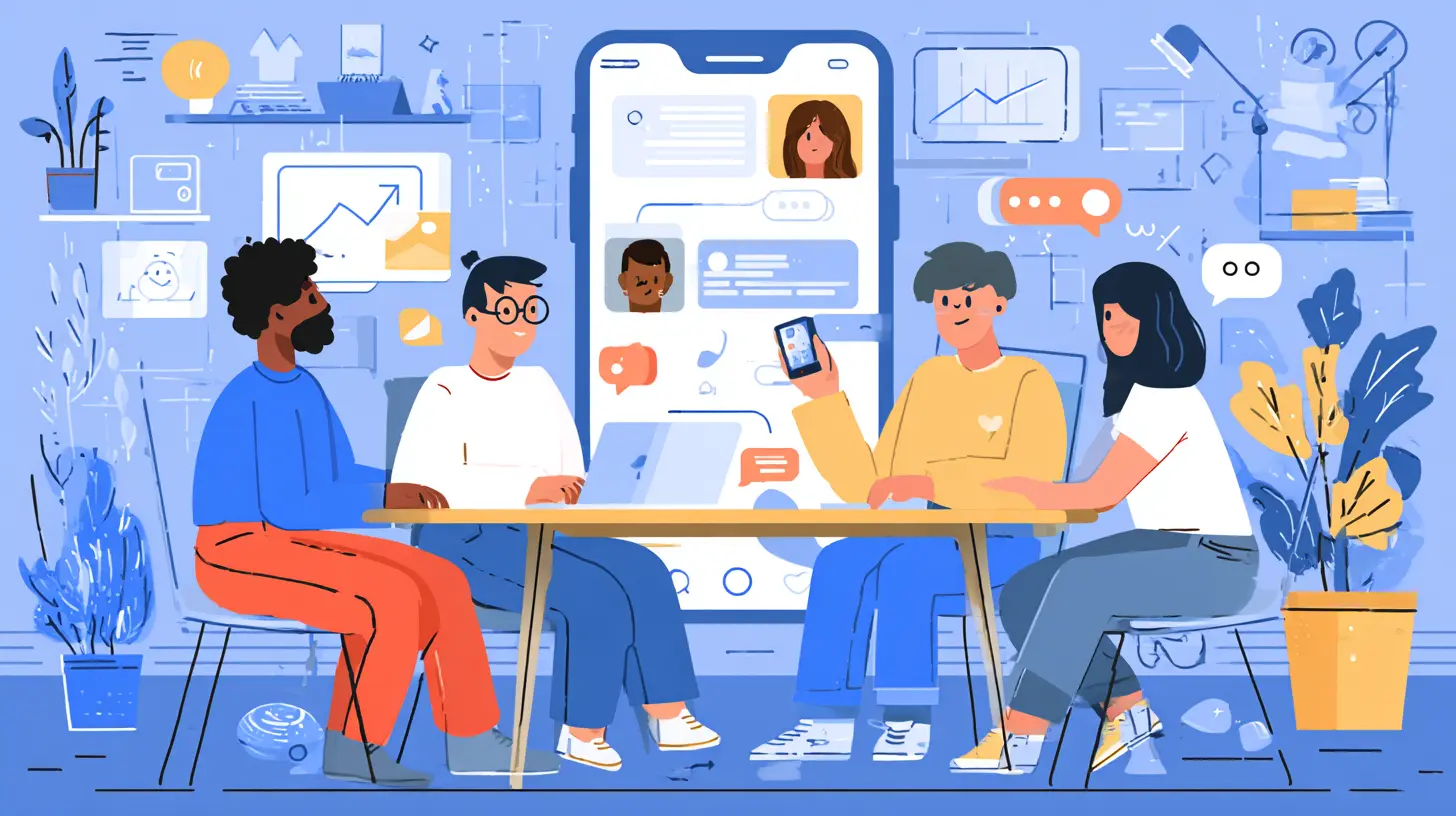
The Rise of the Persistent Workspace
One of the most damaging habits of remote teams is the reliance on the "empty room" model. You have a meeting, the meeting ends, and all the context from that meeting disappears into a recording that no one watches. The chat thread that led to the meeting is separate from the notes, which are separate from the action items. There is no single source of truth.The smarter model is the persistent workspace. This is a digital space that exists before, during, and after any interaction. It contains the relevant documents, the conversation history, the decisions made, and the open questions. It is not a file folder. It is a living entity that grows as the project grows. When a new person joins the team, they do not need a two-week onboarding period. They need access to the workspace, and the workspace does the explaining.
This concept is already emerging in some tools, but it is often bolted on as an afterthought. The real shift will come when the workspace becomes the primary interface, and the chat and video become just two of the activities that happen inside it. Think of it like a construction site. The site is not the blueprint, nor the conversation between the architect and the foreman. It is the physical place where both exist and where the work actually happens. The digital workspace needs to be that place for knowledge work.
The Collaboration App as a Decision Engine
Most collaboration tools are great at capturing activity but terrible at capturing intent. You can see that someone moved a task from "in progress" to "done," but you cannot see why they did it, what alternatives they considered, or what they expect to happen next. This lack of context creates a knowledge gap that is costly over time. When a person leaves the company, they take the reasoning with them, and the team is left with a pile of decisions that no one can fully explain.The next generation of apps will treat decisions as first-class objects. A decision will have an owner, a date, a rationale, a list of alternatives that were rejected, and a link to the evidence that informed it. This is not bureaucracy for its own sake. It is a way to make the invisible work of thinking visible. When a decision is recorded properly, it can be revisited without re-litigating the entire argument. It can be challenged if new evidence appears. It can be taught to new team members as a case study.
The tools that support this do not need to be complex. They need to make it easier to record a decision than to skip it. The current tools make it too easy to say "we decided X" in a chat message and then move on. The smarter tool will prompt you to add a one-line rationale, and it will make that rationale searchable later. The difference is subtle but profound. It turns a collection of messages into an institutional memory.
The Danger of the "All-in-One" Suite
There is a temptation to solve the fragmentation problem by buying everything from one vendor. The promise is seamless integration, but the reality is often a walled garden. You trade one set of problems for another. The suite becomes so large that every feature is mediocre. The video call works, but it lacks the polish of a specialist tool. The document editor works, but it is missing the advanced features of a dedicated writing platform. And because the suite is proprietary, you cannot easily move your data to a better tool when one appears.The smarter approach is a best-of-breed strategy with a strong integration layer. This requires discipline. You need to choose tools that have open APIs and a commitment to data portability. You need to accept that the integration layer will require some setup and maintenance. But the payoff is flexibility. You are not locked in. You can swap out a weak tool for a strong one without rebuilding your entire workflow.
The key is to avoid the "integration tax" where you spend more time connecting tools than using them. The best integrations are invisible. They happen in the background and do not require manual effort. If you find yourself constantly copying data from one app to another, that is a sign that the integration is not good enough. Keep pushing the vendors to do better, or find a tool that already solves that specific problem.
The Human Factor: Trust and Psychological Safety
No amount of software can fix a team that does not trust each other. The best collaboration app in the world will fail if people are afraid to share half-formed ideas or admit they are stuck. This is not a technical problem, but it is a problem that technology can either worsen or improve.The current tools often worsen it because they create a permanent record of every mistake. A poorly worded message can be screenshotted and shared. A decision that turned out wrong can be traced back to the person who proposed it. This leads to defensive behavior. People start to write for the record instead of for the conversation. They become cautious, and caution kills creativity.
Smarter collaboration apps will tackle this by offering different levels of permanence. Some conversations should be ephemeral, like a whiteboard that is erased at the end of the session. Other decisions should be permanent and searchable. The tool needs to make the distinction clear. It should also allow for private channels where a small group can think out loud without the whole company watching. And it should have a way to separate the idea from the person, so that a bad idea can be discarded without damaging the person who proposed it. This is a design challenge, not just a cultural one.
The Async-First Team and the Time Zone Advantage
One of the most underrated benefits of remote work is the ability to hire across time zones. A team spread across eight time zones can be productive for nearly 24 hours a day, if the collaboration model is designed for it. But this only works if the tools support handoffs. The classic example is the "follow the sun" model, where a task is passed from the US team to the European team to the Asian team, each making progress while the others sleep.The current tools make this harder than it needs to be. A video call is impossible for a team with a 12-hour gap. A chat message gets a reply six hours later, which breaks the flow. The smarter approach is to use tools that are built for asynchronous handoffs. This means a task board where the state is always clear, a document where comments are attached to specific text, and a system where the next person can pick up without asking a clarifying question. The tool should not just store the work. It should store the context around the work.
Teams that master this gain a competitive advantage. They can hire the best person for the job, not the best person within a 50-mile radius. They can reduce the time to market because the work does not stop at 5 PM. But they have to be disciplined about documentation. The async-first model demands a higher level of written clarity, and the tools must reward that clarity rather than punish it with extra effort.
The Integration of AI Without the Hype
Artificial intelligence is the most overused word in tech, but it has a genuine role in the future of collaboration. The role is not to replace human thinking. It is to remove the mechanical tasks that surround thinking. For example, an AI can summarize a long meeting and extract action items. It can sort through a hundred comments and highlight the three that need a response. It can draft a status update based on the changes in a project tracker. These are not glamorous tasks, but they are the ones that eat up hours of the week.The danger is that AI will be added as a gimmick, with auto-generated summaries that are wrong and suggestions that are off-base. The smarter implementation is narrow and specific. The AI should work in the background, and it should be transparent about what it does and does not know. When it summarizes a meeting, it should show its work, so a human can verify. When it suggests an action item, it should link to the exact part of the conversation that generated the suggestion. Trust is built through accuracy, not through impressive-sounding but vague claims.
The teams that benefit most from AI will be the ones that use it for the boring stuff. They will not ask the AI to write a strategy document. They will ask it to sort the inbox, flag the urgent items, and draft a response that the human can edit in seconds. This is a modest goal, but it is achievable today, and it delivers more value than a hundred flashy features.
The Cost of Getting It Wrong
The stakes are higher than they appear. A company that continues to use fragmented, notification-heavy, synchronous-first tools will not necessarily fail. It will simply become slower and more stressful. The best employees will burn out and leave. The hiring process will become harder because the company will have a reputation for chaotic communication. The innovation pipeline will dry up because no one has time to think.The opposite is also true. A company that invests in smarter collaboration tools, and the discipline to use them well, will become a magnet for talent. People will want to work there because the work feels better. The tools will not be a source of friction. They will be a source of leverage. The difference is not in the features. It is in the philosophy. The old philosophy is that software is a container for work. The new philosophy is that software is a partner in the work.
What to Do Next
If you are leading a remote team, do not wait for the perfect tool to appear. Start by auditing your current stack. Look for the places where information gets lost, where people have to ask the same question twice, and where the notification noise is highest. Fix those pain points with the tools you have. Set a rule that every meeting has a written outcome. Make it a policy that a decision is not final until it is recorded in a shared space. These are not technical changes. They are behavioral changes that the right tool can then reinforce.When you evaluate new software, ask three questions. Does it reduce the number of context switches? Does it make asynchronous work as easy as synchronous work? Does it capture the rationale behind decisions, not just the decisions themselves? If the answer to any of these is no, then you are buying a shiny distraction, not a solution. The future of remote work is not about working more hours. It is about making the hours count. The tools that understand that will win, and the teams that use them will define how the next generation of work gets done.
all images in this post were generated using AI tools
Category:
Collaborative SoftwareAuthor:

Marcus Gray