How Artificial Intelligence Is Redefining Commuting and Travel
10 August 2026
For decades, the daily commute and long-distance travel followed the same predictable script. You woke up early, fought traffic or waited on a platform, and accepted that a chunk of your life would vanish into transit. Travel meant booking flights through opaque systems, hoping for good weather, and navigating airports with paper tickets and guesswork. That script is being torn up. Artificial intelligence is not just tweaking the edges of how we move; it is rewriting the entire logic of transportation, from the moment you leave your front door to the instant you check into a hotel on another continent.
This is not about self-driving cars alone, though those are part of the story. The deeper shift is happening in the invisible layers: predictive routing, dynamic pricing, personalized scheduling, and real-time adaptation to chaos. AI is turning transportation from a passive experience into an active, intelligent system that anticipates your needs before you articulate them. The result is a fundamental change in what we expect from travel, and how much time and energy we get back.
The End of the Fixed Commute
The traditional commute was built on rigid assumptions. Everyone leaves at the same time, takes the same route, and arrives at the same office. AI is dismanting that model in two ways: by making the existing commute smarter, and by reducing the need for it altogether.Predictive Routing That Actually Works
Navigation apps have used basic algorithms for years, but the new generation of AI goes far beyond "avoid traffic on Main Street." Modern systems ingest data from millions of connected vehicles, traffic cameras, weather feeds, and even local event calendars. They then run machine learning models that predict congestion patterns hours in advance, not just minutes.Consider a commuter in a mid-sized city who drives to work. A standard navigation app might reroute them around a crash. An AI-driven system, however, notices that a stadium event is ending in thirty minutes, that a freight train typically crosses the rail line at 5:15 PM, and that rain is forecast to start at 5:30. It proactively suggests leaving ten minutes earlier or taking a longer but faster backroad, before the congestion even materializes. This is not magic; it is pattern recognition at scale. The system has seen similar combinations of variables hundreds of times and knows the likely outcome.
The practical benefit is measurable. Studies from transportation agencies in several countries suggest that AI-optimized routing can cut commute times by ten to twenty percent in dense urban areas, mostly by avoiding the stop-and-go waves that form when too many cars converge on the same bottleneck. The key is that the AI learns from outcomes, not just from live data. If a suggested route fails, the system adjusts its model for the next time.
The Hybrid Work Puzzle
The rise of hybrid work has created a new problem: how do you decide when to go to the office? AI is stepping in here too, but not in the way most people expect. It is not about a robot telling you which days to work from home. Instead, it is about analyzing your actual work patterns, meeting schedules, and even your productivity levels to suggest optimal in-office days.For example, an AI assistant integrated with your calendar can notice that your most collaborative work happens on Tuesdays and Wednesdays, when your team is present. It can also see that your commute on those days is twenty minutes faster because of reduced traffic. It then recommends shifting your office days to align with those factors. This is a subtle but powerful change. It moves the commute from a fixed daily burden to a strategic decision, one that maximizes both your time and your impact.
The trade-off is privacy. To make these recommendations, the AI needs deep access to your schedule, location history, and even your work output. Some people will find this intrusive. Others will gladly trade that data for an extra hour of sleep each week. The best systems let you control the level of access, and they explain their reasoning clearly. If you do not understand why the AI is making a suggestion, you will not trust it, and you will stop using it.
Rethinking Public Transit with AI
Public transit has always suffered from a fundamental mismatch: fixed routes and schedules versus unpredictable demand. AI is closing that gap in ways that make buses and trains feel almost bespoke.Dynamic Scheduling and Micro-Transit
The most visible change is the rise of micro-transit, where small vans or shuttles operate on flexible routes that change based on real-time demand. Instead of a bus that comes every thirty minutes on a fixed loop, an AI system collects ride requests from an app, groups passengers heading in similar directions, and dispatches a vehicle that picks them up within minutes. This is not a taxi service; it is a shared ride that fills the gap between private cars and traditional buses.Cities like Berlin and Helsinki have piloted these systems with promising results. The AI does the heavy lifting of matching passengers, optimizing routes, and deciding when to add or remove vehicles from the fleet. The key insight is that the system learns from rider behavior. If it notices that demand spikes near a university at 2 PM on Fridays, it pre-positions vehicles there. If a route is consistently underused, it reallocates resources elsewhere.
The downside is that micro-transit can be less efficient than fixed routes during peak hours. When demand is high and everyone wants to go to the same place, a standard bus with a capacity of fifty passengers is far better than ten vans carrying five each. The best systems use AI to decide which mode to deploy, not just how to route it. This hybrid approach, where fixed routes handle the backbone and micro-transit handles the edges, is the most practical path forward.
Predictive Maintenance and Fewer Delays
A less glamorous but equally important use of AI is in keeping trains and buses running on time. Transit agencies are installing sensors on vehicles that monitor everything from brake wear to engine temperature. Machine learning models analyze this data to predict when a component is likely to fail, often weeks before it actually breaks down.This is a massive shift from the old model of scheduled maintenance, where parts were replaced on a fixed calendar regardless of their condition. Predictive maintenance means that a train is taken out of service only when the AI detects an anomaly, not because the manual says it is due for a check. The result is fewer breakdowns, fewer delays, and lower costs. For the commuter, this translates to a more reliable service, which is the single biggest factor in whether people choose transit over driving.
The challenge is data quality. Predictive maintenance only works if the sensors are accurate and the historical data is clean. Agencies that rush into this without proper data governance end up with false alarms and missed failures. The best practice is to start small, with one vehicle class or one line, and expand only after the model has proven its accuracy.
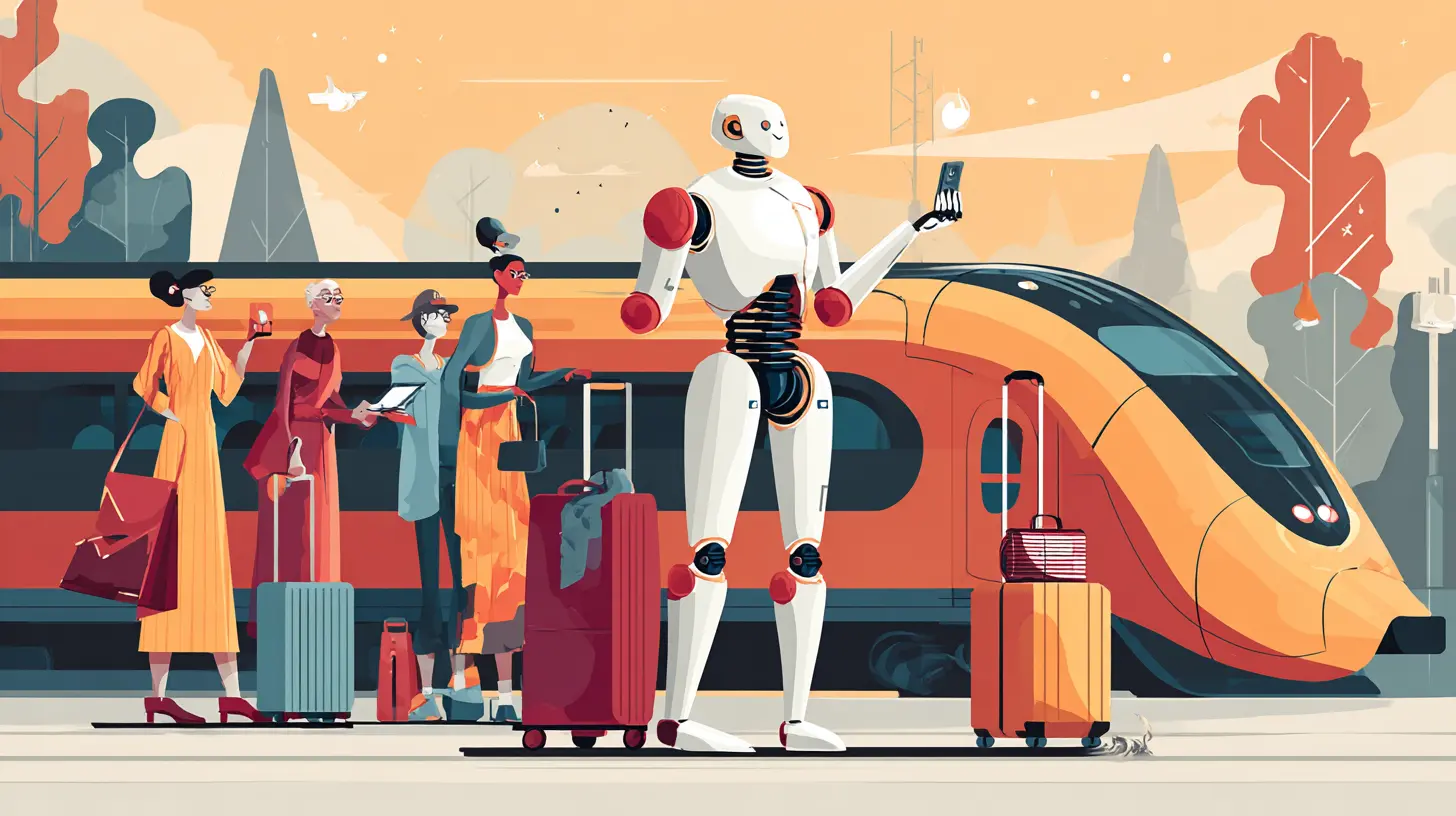
The Airport Experience Gets a Brain
Air travel has long been the most stressful part of any journey. AI is attacking that stress from multiple angles, though the results are still uneven across airlines and airports.Personalized Journey Management
The old way of flying involved checking a website for your flight status and hoping for the best. The new way involves an AI assistant that monitors your entire journey, from the moment you leave home to the moment you land. It knows your drive time to the airport, the current security wait, the gate number, and even the likelihood of your connecting flight being delayed.If your first flight is running late, the AI does not just tell you about the delay. It rebooks your connection, alerts the airline, and arranges for a new seat, all before you even land. It also checks if there is an earlier flight you can catch, and if so, it flags you for standby. This level of proactive management is becoming standard on the better airline apps, and it is powered by AI that integrates flight schedules, weather models, and airport operations in real time.
The practical advice here is to enable notifications and actually read them. Many travelers ignore these alerts because they are used to generic messages. The new systems are specific and actionable. If the app says "Your gate has changed to B12, and you have 18 minutes to get there," it is not a suggestion; it is a directive. The AI has already calculated your walking time and knows you can make it if you move now.
Security and Boarding Optimization
Airports are using computer vision and machine learning to speed up security screening. Cameras can now identify suspicious items in bags without requiring a human to stare at a screen for hours. This does not replace the human screener; it augments them by flagging only the bags that need a closer look. The result is shorter lines and fewer false alarms.Boarding is another area where AI is making a difference. Airlines are experimenting with algorithms that assign boarding groups based on seat location, baggage amount, and even walking speed. The goal is to reduce the time the plane sits at the gate, which is the most expensive part of any flight. By grouping passengers who are likely to move quickly, the AI can cut boarding time by several minutes. That does not sound like much, but over hundreds of flights a year, it adds up to significant savings for the airline and less time standing in the aisle for you.
The trade-off is fairness. Boarding algorithms that prioritize speed can feel arbitrary and confusing. Passengers do not like being told they are in group 7 when they paid for a window seat in row 12. The best systems explain the logic in simple terms, such as "You have a large carry-on, so you board later to avoid blocking the aisle." Transparency is essential for acceptance.
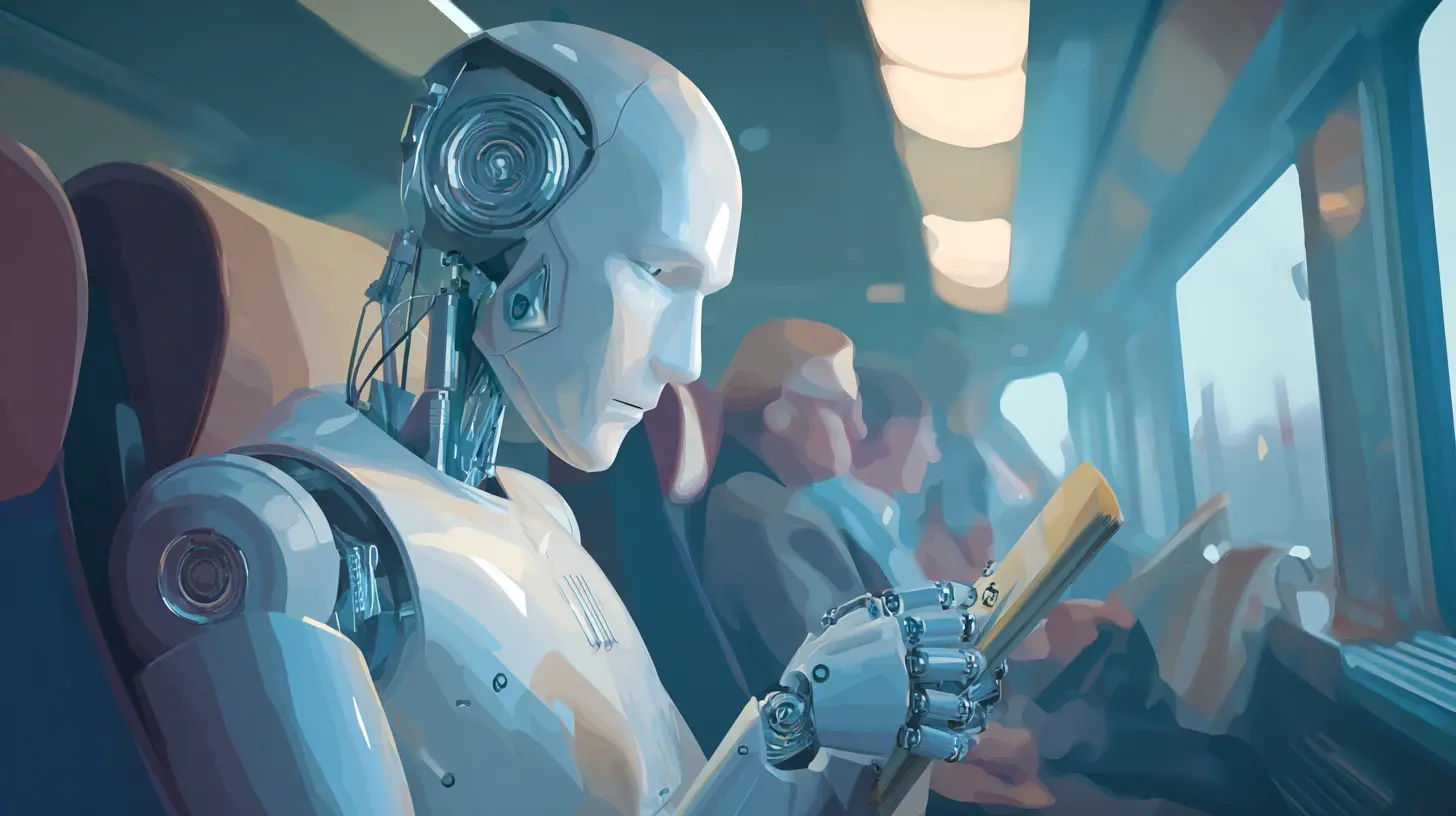
The Road Trip Reimagined
Long-distance driving, whether for a vacation or a cross-country move, is being transformed by AI in ways that go beyond navigation.Intelligent Route Planning for Electric Vehicles
Electric vehicles are wonderful, but they introduce a new anxiety: range. AI is the solution. Modern EVs have navigation systems that not only plan your route but also calculate your energy consumption based on elevation, temperature, wind, and even your driving style. They then recommend charging stops that align with your needs, factoring in the speed of the charger, the availability of amenities, and the likelihood of a wait.This is a huge improvement over the early days of EVs, when drivers had to manually map out charging stations and hope they were working. The AI learns from your driving habits. If you tend to drive 10 miles per hour over the limit, it adjusts its range estimates accordingly. If you prefer to stop every two hours for coffee, it finds chargers that are near good coffee shops. The result is a road trip that feels almost effortless, even on routes you have never driven before.
The common mistake is trusting the AI blindly without understanding its assumptions. If you are towing a trailer or carrying a roof box, the energy consumption will be much higher than the default estimate. The best practice is to input your actual load and driving preferences into the system, and to always have a backup plan for charging, especially in rural areas where chargers are sparse.
Adaptive Cruise Control and Lane Keeping
The current generation of driver assistance systems, often grouped under the label of Level 2 automation, is a form of AI that many people use without realizing it. Adaptive cruise control does not just maintain a set speed; it uses radar and cameras to keep a safe distance from the car ahead, slowing down and speeding up automatically. Lane keeping assist uses computer vision to keep the car centered in its lane.These systems are not self-driving, but they dramatically reduce the fatigue of long drives. A driver who uses them on a six-hour trip arrives much fresher than one who manually adjusts speed and steering the entire way. The key is to understand their limitations. They can struggle in heavy rain, with faded lane markings, or when the car ahead cuts in suddenly. The AI is good, but it is not perfect, and the driver must remain engaged.
The best practice is to use these systems as a co-pilot, not a replacement. Keep your hands on the wheel, your eyes on the road, and your mind on the task. The AI handles the monotonous parts, but you handle the judgment calls. This division of labor is the sweet spot for current technology, and it is likely to remain the standard for several more years.
The Hotel and Destination Side
Travel does not end when you park the car or exit the train. AI is also changing how you choose where to stay and what to do when you get there.Hyper-Personalized Recommendations
The old travel sites showed you generic lists of "top attractions" or "best hotels." AI-powered platforms go much deeper. They analyze your past trips, your reviews, your social media activity, and even your browsing history to build a profile of your preferences. Then they generate a shortlist of options that match your specific tastes.For example, if you tend to stay in boutique hotels with a focus on local food, the AI will not show you a chain hotel with a generic restaurant. It will find a converted warehouse with a farm-to-table kitchen and a rooftop bar. If you prefer quiet neighborhoods over tourist centers, it will filter accordingly. This is not about hiding options; it is about reducing decision fatigue. You still have the final say, but the AI has already done the heavy lifting of filtering out the noise.
The downside is the filter bubble. If the AI only shows you what it thinks you like, you might miss out on experiences that are outside your comfort zone but ultimately rewarding. The best platforms have a "surprise me" feature that deliberately introduces a small amount of randomness. This is a good practice for travelers who want to balance personalization with discovery.
Dynamic Pricing and When to Book
AI has been driving dynamic pricing in travel for years, but it is becoming more sophisticated. Airlines and hotels use machine learning to adjust prices in real time based on demand, competitor pricing, and even weather forecasts. This can work in your favor if you know how to play the game.The key insight is that AI pricing models are not random. They follow patterns that can be predicted. For example, prices for a flight often drop on Tuesday afternoons, not because of some industry rule, but because the AI has learned that demand is lower then. Similarly, hotel prices tend to rise as the check-in date approaches, but they may drop at the last minute if occupancy is low.
The practical advice is to use price prediction tools that are themselves powered by AI. These tools analyze historical price data for your specific route or hotel and tell you whether to book now or wait. They are not perfect, but they are far better than guessing. The trade-off is that you might miss a great deal if you wait too long. The best strategy is to set a price alert and be ready to book when the AI says the price is at a low point.
The Privacy and Ethical Questions
All of this AI-powered convenience comes at a cost, and that cost is data. Every route you take, every search you make, every booking you confirm is feeding a model that knows more about your habits than you probably realize.The ethical issue is not just about privacy, though that is significant. It is about control. When an AI decides that you should leave at 7:15 instead of 7:30, it is making a judgment about your priorities. It assumes you value speed over scenery, efficiency over spontaneity. If the AI is wrong, you might end up on a faster route that is also more stressful, or in a hotel that matches your profile but lacks the charm you were hoping for.
The best defense is awareness. Understand what data you are sharing and what the AI is doing with it. Most travel apps have privacy settings that let you limit data collection, but they often bury these options in menus. Take the time to review them. Also, remember that you can override the AI. If a suggestion feels wrong, trust your gut. The AI is a tool, not a master.
There is also the question of equity. AI systems are trained on historical data, and if that data reflects existing biases, the AI will perpetuate them. For example, a predictive policing system used by transit agencies might over-patrol certain neighborhoods, leading to more arrests there, which then feeds back into the model. This is a real risk, and it requires human oversight to prevent. Transit agencies and travel companies need to audit their AI systems for bias and make adjustments when necessary.
The Road Ahead
The next decade will bring changes that make today's AI look primitive. Fully autonomous vehicles are the most obvious, but they are not the most impactful. The bigger shift will be in the integration of all these systems. Your car, your train, your flight, and your hotel will all be connected through a single AI that manages your entire journey as one continuous experience.Imagine a system that knows your flight lands at 6 PM, that your luggage will take twenty minutes to arrive, that the train to the city leaves at 6:45, and that there is a restaurant near the station that serves your favorite dish. It books a table for 7:15, reserves a seat on the train, and sends you a single notification with all the details. That is not science fiction; the pieces already exist. The challenge is getting them to talk to each other.
The practical takeaway for travelers and commuters is to start using the AI tools that are available now. Enable the notifications, let the apps learn your preferences, and give the systems a chance to prove themselves. The more data they have, the better they perform. But always keep a human backup plan. AI is excellent at handling the routine and the predictable. It is still weak at handling the truly unexpected, like a sudden snowstorm or a family emergency.
The future of commuting and travel is not about machines replacing humans. It is about machines handling the complexity so that humans can focus on what matters: getting where we need to go safely, efficiently, and with a little less stress. That is a future worth embracing.
all images in this post were generated using AI tools
Category:
Ai In Daily LifeAuthor:

Marcus Gray
Discussion
rate this article
1 comments
Naomi Dodson
AI is transforming how we commute and travel.
August 10, 2026 at 11:20 AM